
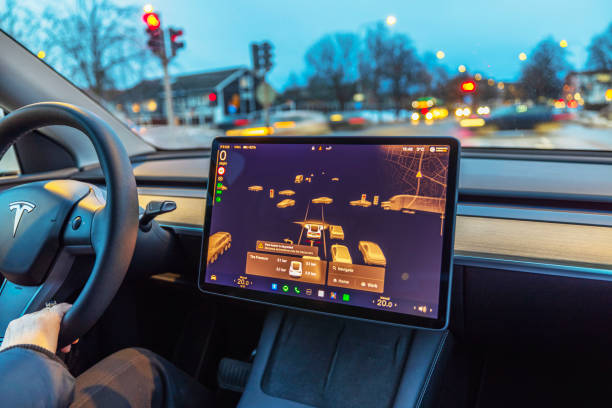
Tesla’s Full Self-Driving, also known as FSD, is one of the most talked-about driver-assistance technologies in the world. But despite its name, FSD does not mean that a Tesla can drive completely on its own.
In Europe, Tesla is working toward approval for its supervised FSD system. European regulators have been discussing how and when the technology could be allowed more widely across the region.
What Does “Supervised” Mean?
Tesla FSD is classed as a Level 2 driving-assistance system. This means the car can help with steering, braking, and acceleration in some situations. But the driver still has a very important job.
They must:
- Keep their eyes on the road
- Stay ready to take over at any moment
- Follow traffic laws
- Remain responsible for the vehicle
The car may assist with driving, but it is not a fully autonomous vehicle.
Why Is Europe Careful?
European roads are very different from place to place. A system that works in one country may encounter different road signs, lane markings, weather conditions, and driving habits elsewhere.
That is especially relevant for Ireland. Drivers deal with heavy rain, narrow country roads, roundabouts, changing road surfaces, and busy city traffic. Autonomous driving software needs to perform safely in all these situations, not just on clear motorways.
The Bigger Picture
Tesla’s push for European approval is important because it could shape how other carmakers approach advanced driver assistance. It may also encourage governments to create clearer rules for autonomous technology.
For now, the key message is simple: FSD is advanced assistance, not a replacement for the driver. Europe’s cautious approach shows that safety and clear regulation must come before a wider rollout.